At Tynapse, we participated in NVIDIA GTC 2026, held in San Jose, California from March 16–19 and were selected as a Global Top 6 Finalist in the Startup Pitch competition co-hosted by AWS × NVIDIA.
Six months since founding. The only team from Asia. These two facts are what stand out most when we reflect on what this participation meant. We wanted to see for ourselves what the global stage looks like and how what we're building reads to the world.
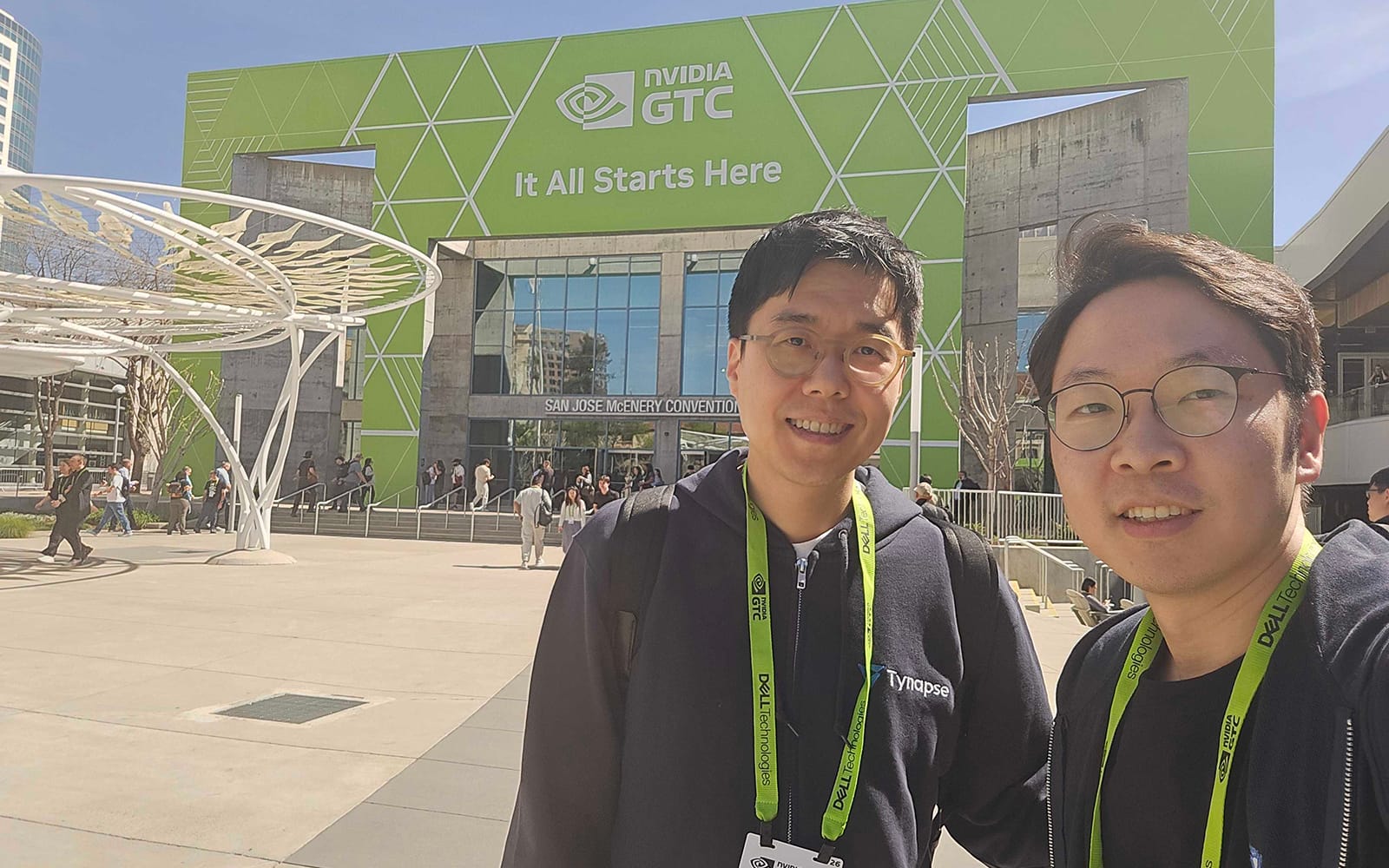
In this post, we'd like to share both the journey to our Top 6 selection and the broader trends in the global AI governance market that we witnessed firsthand on the GTC floor.
GTC 2026: Safe and Trustworthy AI
NVIDIA GTC is the world's premier AI conference, spanning venues across San Jose. Each year, tens of thousands of developers, enterprise leaders and investors gather. It's far more than a technology showcase. It's the single densest read on where the AI industry is headed over the next twelve months.
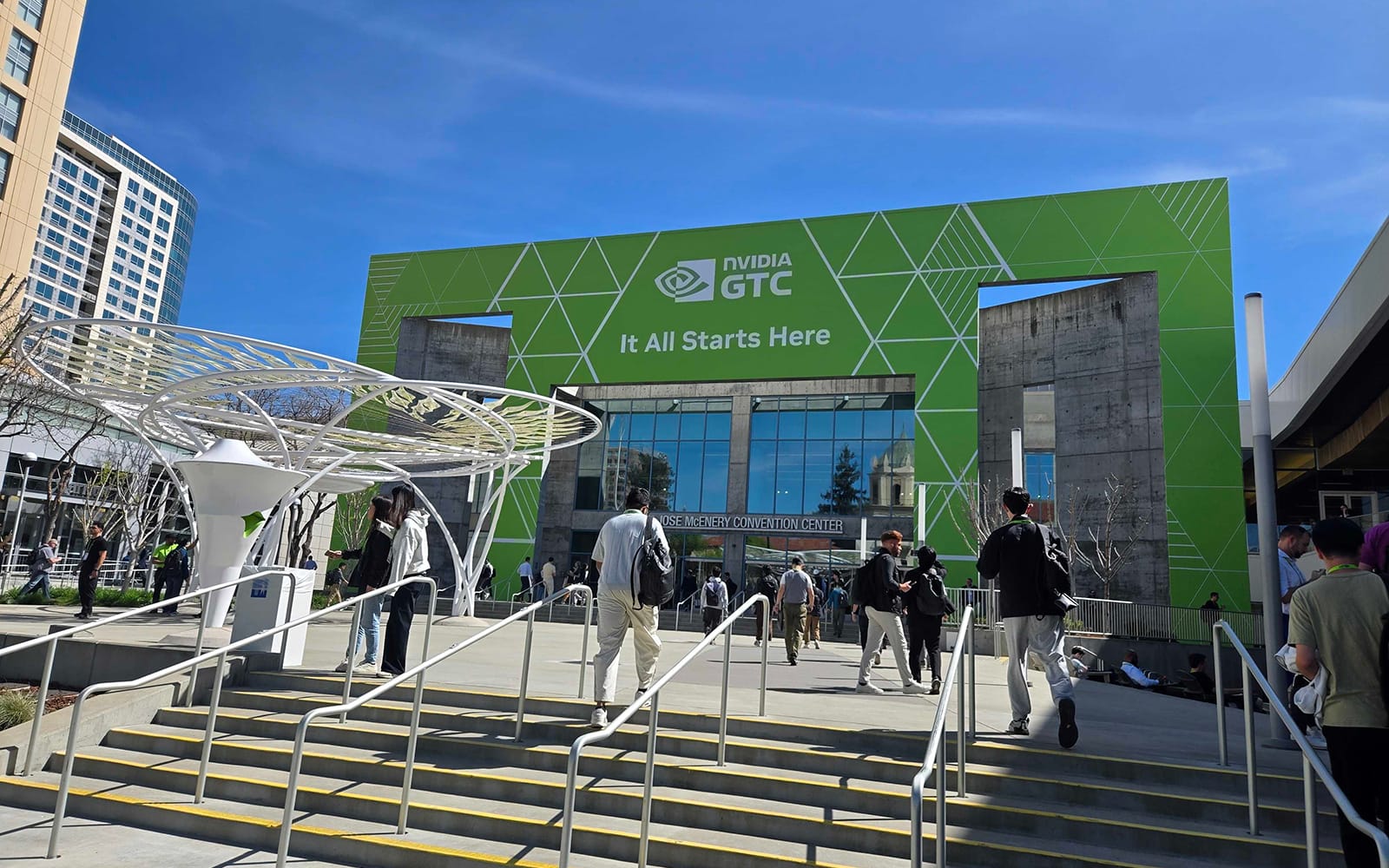
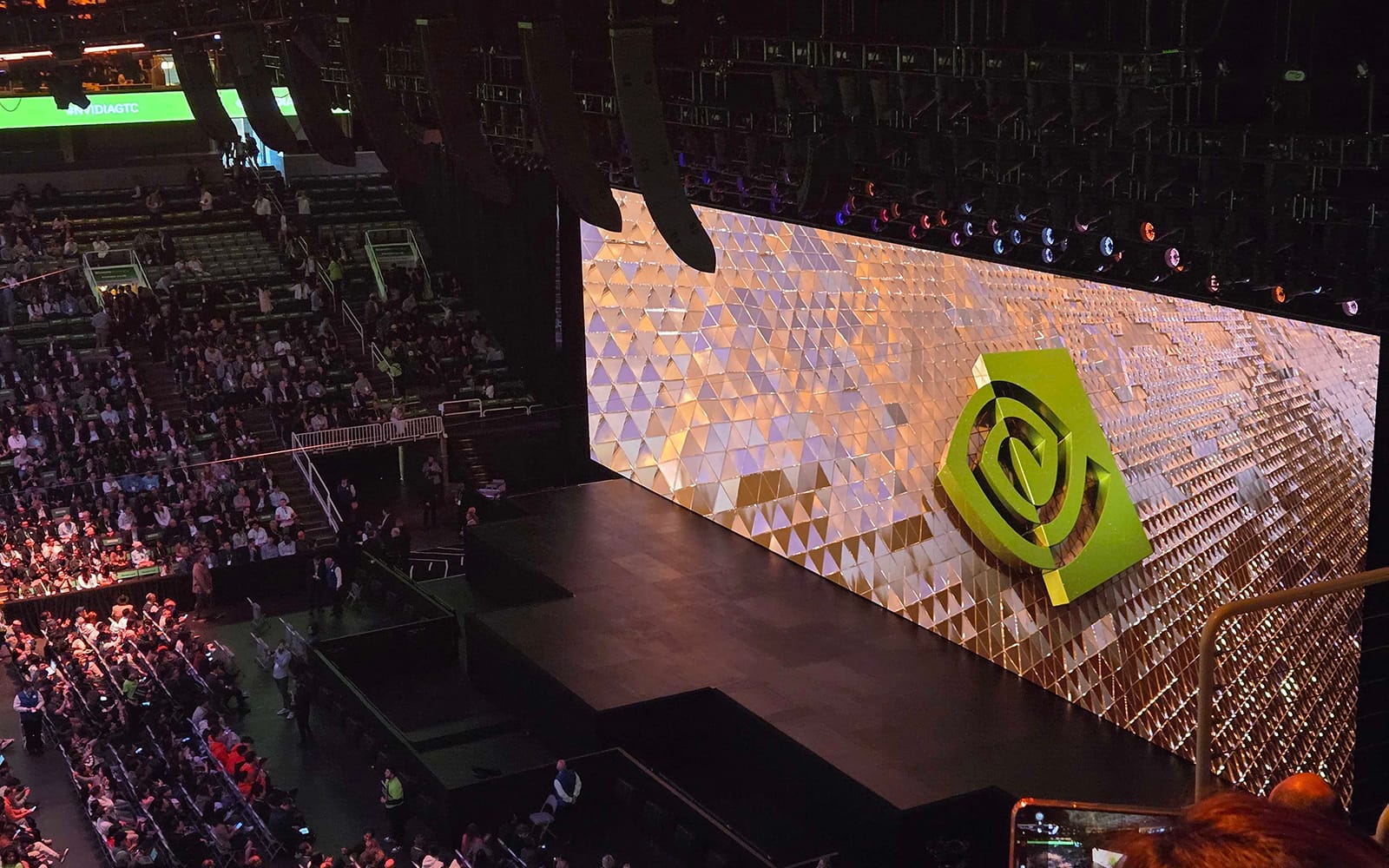
At GTC 2026, the recurring theme across Jensen Huang's keynote and sessions throughout the venue was not "faster GPUs, bigger models." Instead, the conversation converged on one question:
"How do we operate the AI we've built safely?"
Jensen declared the dawn of the AI agent era, while drawing a clear line: you cannot release these agents into enterprise systems without guardrails. NVIDIA made that concrete at this GTC by unveiling NemoClaw, an AI agent platform designed to isolate execution environments, prevent sensitive data from leaking externally and govern agent behavior according to enterprise policy. The fact that the world's most powerful AI chip company led not with "a faster chip" but with "a framework for safe operation." That, in itself, signals where the market is going.
Behind this shift is a real change in the regulatory landscape. Korea became the first country in the world to enact an AI Basic Act, while the EU AI Act continues its phased rollout. As regulatory requirements tighten and AI agents become integrated into core enterprise workflows, governance and compliance are no longer optional; they are essential infrastructure. It's within this context that Tynapse is building a Trust Layer that monitors enterprise AI agent behavior in real time and verifies regulatory compliance.
AWS Startup Pitch: A Global Proving Ground
Alongside the main conference, AWS × NVIDIA co-hosted a Startup Pitch competition on the GTC floor. Teams from North America, Europe, Latin America and other regions took the stage. Tynapse was the only team selected from Asia-Pacific, presenting before judges from AWS Global VC, NVIDIA Inception and Pear VC.
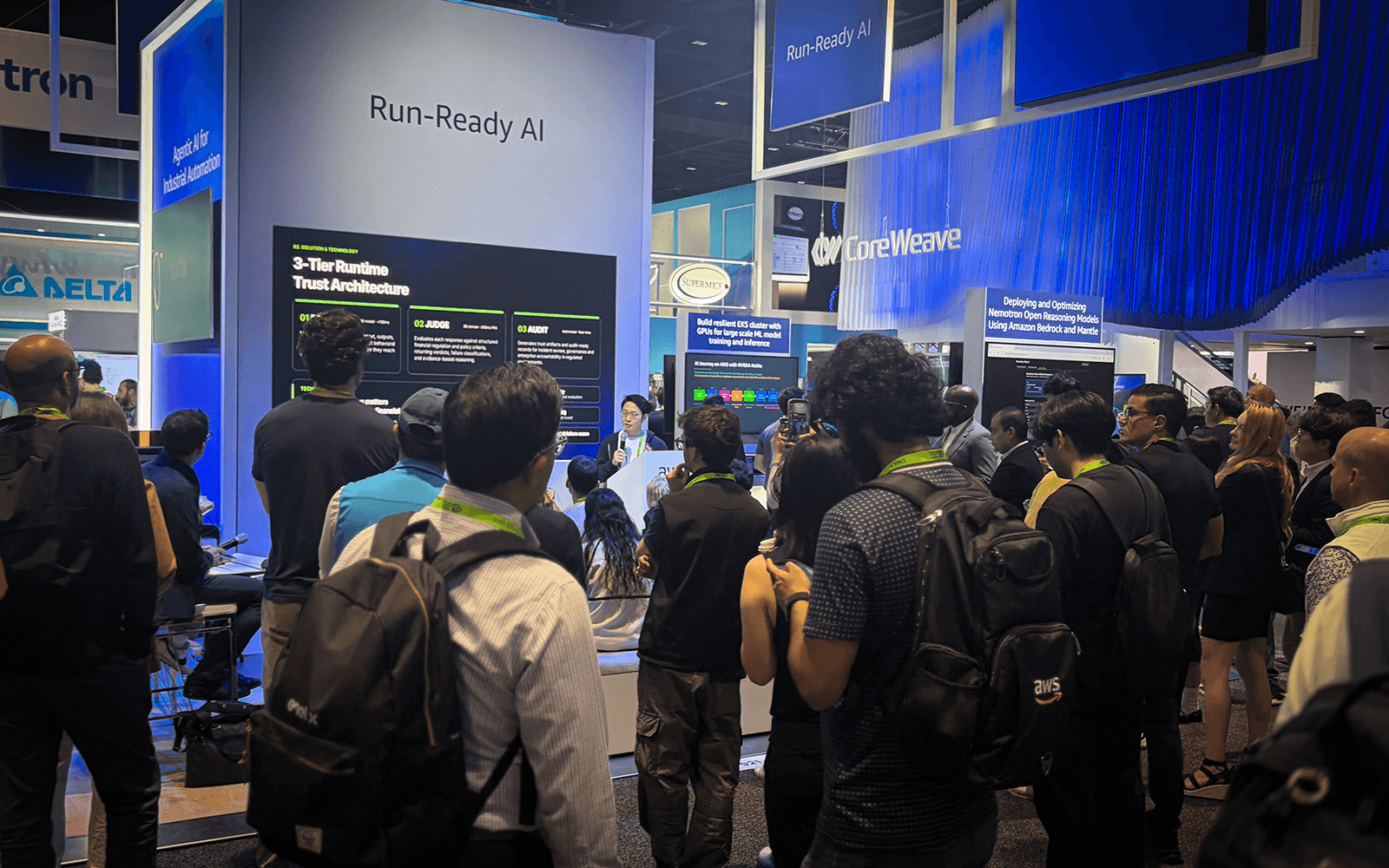
Results: Top 6 Finalist
The ultimate winner of the competition was NomadicML, a team that had already secured investment from top-tier Silicon Valley angels including Jeff Dean and whose customer slide featured a lineup of household-name enterprises. Losing to a team with that level of both technical depth and market validation is a result we can respect.
We finished in the Top 6. It would be dishonest to say there's no disappointment, but we were the only team that had been founded just six months prior and the only team from Asia. We see it as a meaningful result in that it gave us a clear read on where Tynapse stands against a global benchmark.
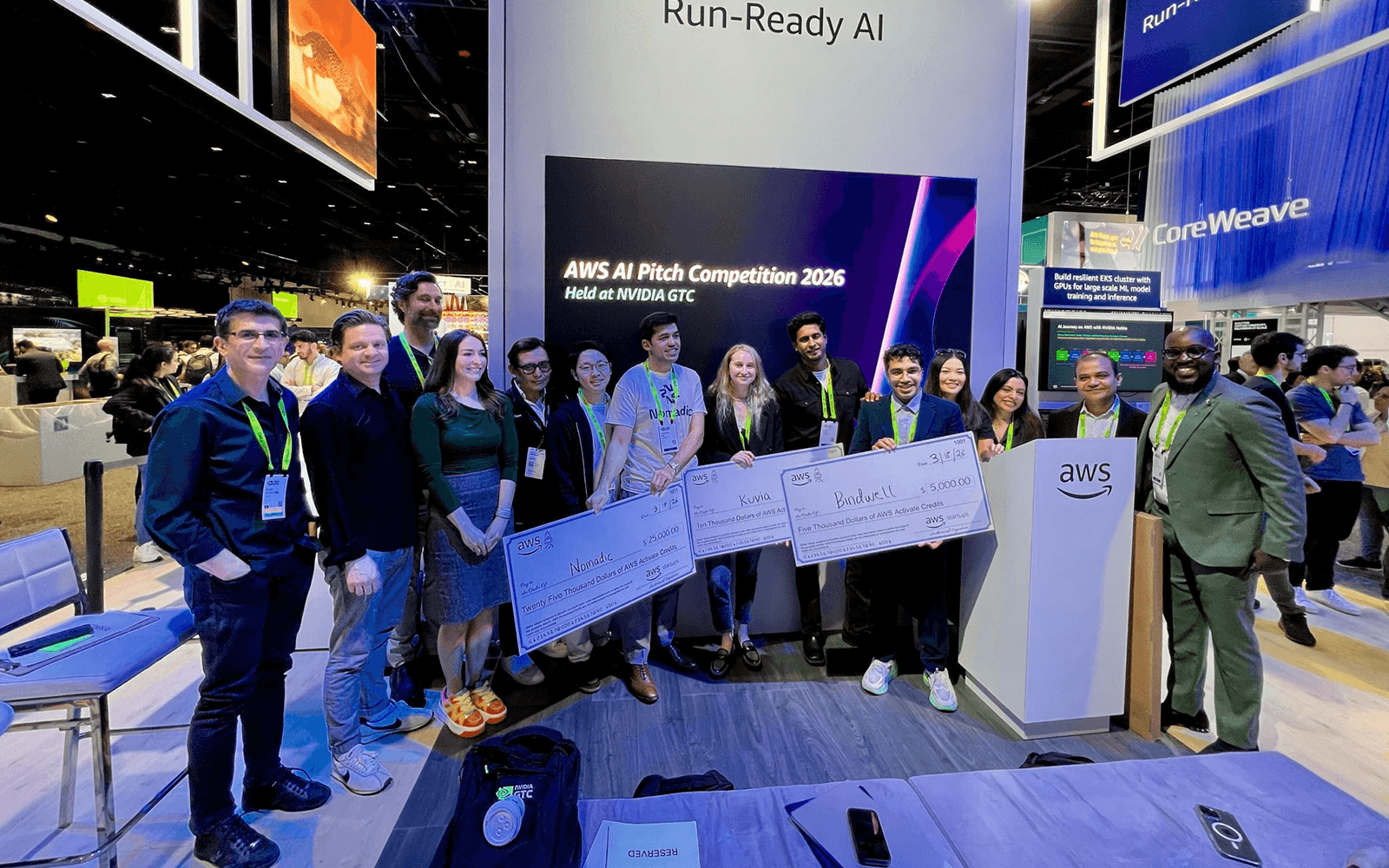
Beyond the results, the moment that stayed with us most was what happened right after our presentation: a Pear VC partner who had been on the judging panel came up to us directly and asked whether our seed round was still open. It was the moment we confirmed that the problem we're solving and the way we're approaching it, resonates with investors too.
Closing Thoughts
The biggest takeaway from this trip was the reality of the market. The fact that judges were scrutinizing enterprise applicability just as much as technical maturity. The fact that NVIDIA itself put "safe operation" at the top of its agenda through NemoClaw. These confirmed to us that the problem we're solving is a genuine bottleneck, right now, at this moment in the industry.
GTC 2026 was where we witnessed the AI industry's shift from "what can we build?" to "how do we operate it safely?" We are building the infrastructure that transition demands.